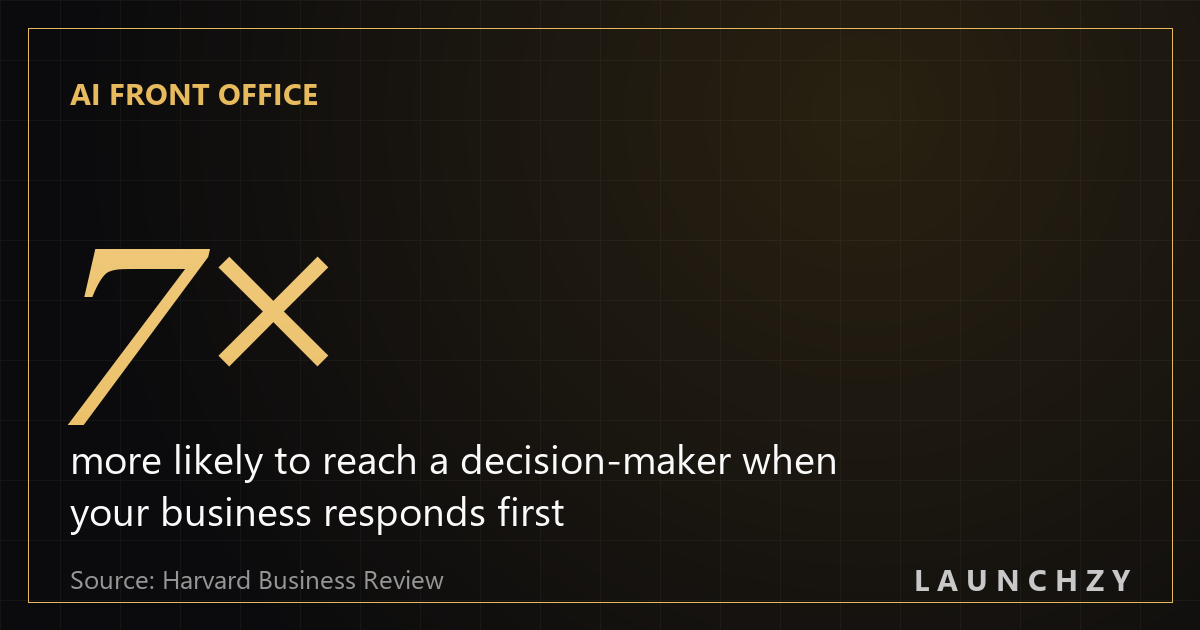
If you own a clinic, a trades business, or any company that lives on the phone, you've probably heard the term "AI receptionist" thrown around a lot lately. Here's what it actually is, what it can and can't do, and how to tell if it's worth it for your business.
What an AI receptionist actually does
An AI receptionist is a voice agent that answers your business phone line instead of a human. It picks up in a couple of seconds, holds a real conversation with the caller, and handles the same tasks a front desk person would handle. That usually means:
Answering common questions about hours, pricing, and services. Booking or rescheduling appointments straight into your calendar. Taking a message and routing it to the right person when something needs a human. Following up on missed calls and quotes that never got answered.
It's not a phone tree. You don't press 1 for sales and 2 for support. You talk to it the way you'd talk to a person, and it understands context, handles interruptions, and adjusts if you change your mind mid-sentence.
How it's different from a regular chatbot or voicemail
Voicemail just records a message and hopes someone calls back before the customer gives up and calls your competitor instead. Most people don't leave a voicemail at all, they just hang up and dial the next business on the list.
Older phone systems (the ones that say "press 1 for...") follow a fixed script. If the caller asks something outside that script, the system breaks. An AI receptionist works differently because it's built on a language model that actually understands what's being said, not a decision tree of pre-recorded prompts.
Who actually needs one
An AI receptionist makes the most sense for businesses where the phone is the main way customers reach you and where missing a call means losing the job. That covers clinics and medical practices, plumbers, electricians, HVAC and roofing companies, law firms, agencies, and any local service business that gets calls outside a strict 9 to 5.
It makes less sense if your business barely gets inbound calls, or if every call needs deep technical judgement that genuinely can't be handled without a specialist on the line. Most service businesses aren't in that second category, even if it feels that way from the inside.
What it costs versus what it replaces
A part time receptionist or answering service typically runs somewhere between $1,500 and $2,500 a month, and that only covers business hours. An AI receptionist runs at a fraction of that, answers every call around the clock including nights, weekends and holidays, and never calls in sick.
That doesn't mean it replaces every human role in your business. It replaces the specific job of picking up the phone, and it does that job without the coverage gaps a single employee always has.
What good ones sound like
The bar for a good AI receptionist isn't "sounds robotic but gets the job done." It should sound like a real person, handle small talk, and recover naturally if the caller goes off script. If you're evaluating one, call it yourself first and see if you can tell within the first ten seconds that you're talking to a machine. If you can, it's not ready for your customers either.
Hear one for yourself
Launchzy's AI Front Office is the AI receptionist built for service businesses that can't afford to miss a call. Book a free audit call and we'll show you exactly how it sounds on your own line.
Book your free audit call →